
Indonesia has restricted Wikipedia’s login feature. The government cites compliance with registration requirements for private electronic system operators. Technically, Wikipedia is not blocked—articles remain readable. But one vital function has vanished, like the ability to log in, edit, and contribute. For most people, Wikipedia is a place to look up quick definitions or historical summaries.
For volunteers, educators, and researchers, it is a collective workspace. Articles on local culture, regional figures, endemic diseases, or public policy are often written by contributors with direct contextual knowledge. When access to contributions is restricted, this contributes to the cessation of distribution and circulation of local knowledge documentation itself.
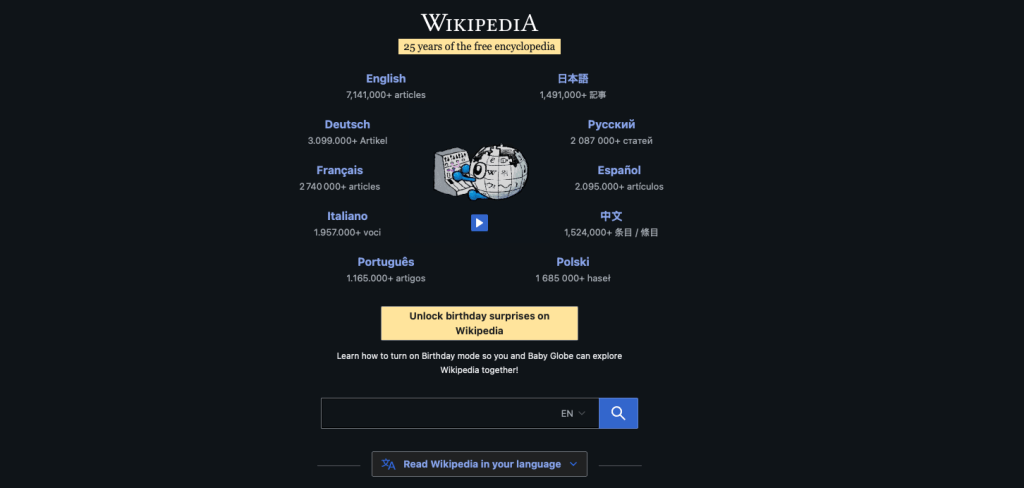
The data show how vital open-knowledge infrastructure like Wikipedia has become. The encyclopedia is available in over 300 languages and contains more than 60m articles across Wikimedia projects. It consistently ranks among the world’s ten most-visited websites, with billions of monthly visits, making it a primary entry point for public information searches.
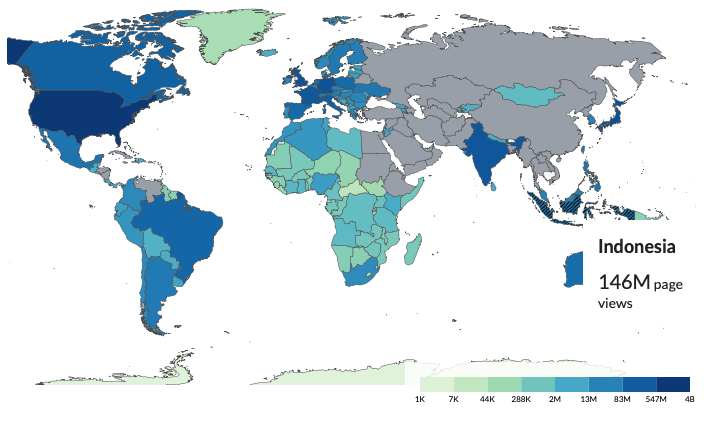
In health, Wikipedia’s medical articles receive hundreds of millions of visits annually, serving as an initial information source for the public and even health workers. Studies suggest that the quality of Wikipedia’s medical articles is, in many cases, comparable to traditional reference sources in factual accuracy. In education, integrating Wikipedia editing into curricula has been shown to improve students’ information literacy, source-evaluation skills, and understanding of evidence-based knowledge production. Wikipedia-based education programmes have been adopted at universities to train public responsibility in scholarly writing and knowledge communication.
Indonesia is a country of extraordinary cultural and linguistic diversity. Much local knowledge is not recorded in international journals or academic books. Wikipedia has been one space where such knowledge can be documented and accessed globally. Consider the documentation of traditional medicinal practices, regional historical events, or endangered languages spoken by small communities. These narratives exist primarily in oral traditions or scattered local publications. Without active local contributors, such knowledge risks being lost or misrepresented. If local contributors can no longer edit, narratives about Indonesia will increasingly depend on external sources. The risk is becoming objects of writing, not subjects writing themselves.
This impact is also felt in the field of education. In universities throughout Indonesia, lecturers use Wikipedia as a tool to train information literacy.
For example, I use Wikipedia with students to write or improve articles using credible sources. Wikipedia can serve as a learning medium for testing students on the hierarchy of scientific evidence on public knowledge platforms. The process I use in this learning also teaches that knowledge does not just appear, but is built through verification, discussion, and correction. A student writing about the origins of the H5N1/avian influenza epidemic will learn to distinguish between primary sources, peer-reviewed research, and unreliable claims. They learn to cite correctly, write neutrally, and interact with editors who challenge their work. From Wikipedia, public contributors have a role in curating and updating data. However, when login access is restricted, this learning space becomes limited. Reading alone is not enough to understand how knowledge is formed.
Governments have reasons to regulate digital platforms. Data protection, illegal content, and platform accountability are serious matters. The spread of misinformation, the exploitation of user data, and the challenges of content moderation are legitimate concerns that require regulatory responses. But an approach that fails to distinguish between commercial platforms and public-knowledge infrastructure risks unintended consequences. Wikipedia is not a profit-seeking social-media company. It is a non-profit project that depends on voluntary participation. It does not harvest user data for advertising. It does not use algorithms to maximise engagement. It does not host user-generated content without review. When compliance policies are applied uniformly, what suffers is the public knowledge commons.
Such restrictions could weaken Indonesia’s position in the global knowledge ecosystem. In the digital age, a country’s visibility is determined not only by scholarly publications but also by the availability of publicly accessible information. Wikipedia articles often serve as the first port of call for journalists, researchers and students seeking to understand a country. An article on Indonesian batik, written by local textile experts, provides context that foreign observers might miss. An entry on a regional conflict, edited by historians familiar with local dynamics, offers nuance absent from international coverage. If local contributions decline, available information may become less complete or less contextual. The world’s understanding of Indonesia would be shaped increasingly by outsiders.
Why should the public speak up? Because open knowledge is a shared interest. It supports education, journalism, research, and evidence-based decision-making. When participatory space shrinks, the quality of the public sphere suffers. The right to information includes not only the right to read, but also the right to contribute to knowledge production. Public voice matters to ensure that digital regulation does not sacrifice educational and knowledge interests. Academics, teachers, journalists and volunteer communities have direct experience of how Wikipedia is used as a learning tool and information source. Their perspectives are needed so that policy is viewed not only through the lens of administrative compliance, but also through its impact on society.
Okay, when Wikipedia is just one platform, but the key point is how Indonesia positions its citizens within the digital knowledge ecosystem. Will they become active contributors who enrich global knowledge, or will they remain passive consumers? Although the login restriction seems minor, it is these small decisions that can influence the future trajectory of knowledge. Decolonizing knowledge may decrease.

 ScienceWatchdog.id