
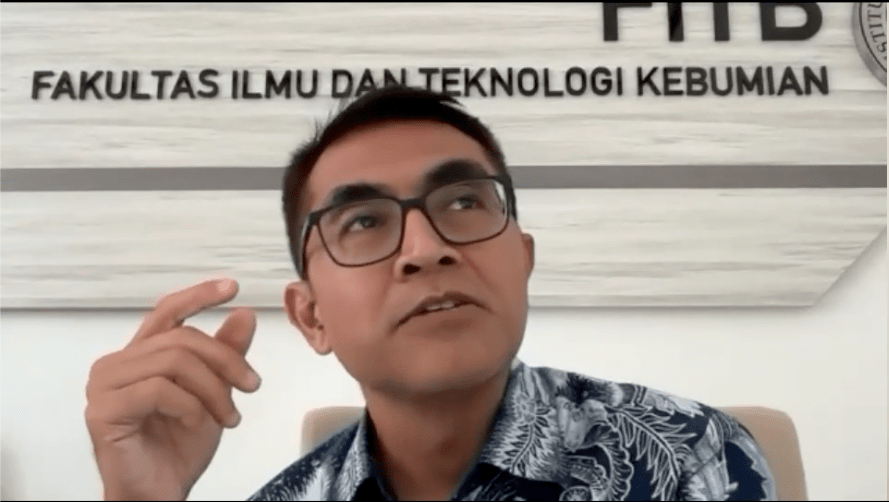
When Indonesian geologist Dasapta Erwin Irawan first encountered the idea of open science in 2013, it was not through policy mandates or institutional reforms, but by accident. “Idle time,” he says. “Serendipity again, I met someone who introduced me to open science.”
That someone was the late Jon Tennant, a British paleontologist and open science advocate whose personable approach made a lasting impression on Dasapta. Their shared interest in fossils sparked a friendship that went on to shape Dasapta’s trajectory as one of Indonesia’s earliest and most vocal proponents of the open science movement. “He greeted everyone, answered any question, and had a great sense of humor. His ideology was infectious,” Dasapta recalls.
“It began with serendipity,”
Indonesia’s open science movement lacks a coherent national narrative. “There was never a joint movement,” Dasapta says. “Each person had their own path, and I don’t even know how many there were.” For many, including him, open access was the logical entry point. “In the early 2000s, as internet access spread, open access became dominant, it was our gateway into open science.”
In 2017, Dasapta helped launch INA-Rxiv, Indonesia’s first preprint server under the Open Science Framework. It quickly attracted thousands of manuscript uploads—but that success came at a cost. “I remember being asked to contribute 300 million rupiah (about $20,000) per year,” he says. With no institutional backing, he and his team withdrew. INA-Rxiv was later rebranded as RINarxiv and moved to a BRIN (LIPI) server. But enthusiasm dwindled. “The energy was individual […] then life changed. RINarxiv has become pretty much passive now.”
Although the national momentum has stalled, Dasapta believes open science in Indonesia still has potential—particularly through science communication. Platforms like LinkedIn and Wikipedia, he says, are drawing younger audiences. “Any component of open science can be seeded through science communication.”
Yet the obstacles remain formidable. The national research evaluation system, he says, is still fixated on journal articles, not research processes. “If the article doesn’t raise suspicion, they don’t look inside. Whether the data is accurate or not doesn’t matter—unless there’s doubt, no one digs deeper.”
Dasapta is especially critical of Indonesian academics with overseas PhDs who fail to carry their training in open practices back home. “Many submitted data during their PhDs, followed transparency protocols. But when they manage journals here, they revert. Journals are the same as 20 years ago, just with shinier websites.”
“Many submitted data during their PhDs, followed transparency protocols. But when they manage journals here, they revert. Journals are the same as 20 years ago, just with shinier websites.”
Now as a vice-dean at Institut Teknologi Bandung (ITB), Dasapta is trying to bring openness from the inside. He transformed his faculty’s website into a hub for documenting faculty activities—from papers to community projects. “Whatever it is, video, podcast, blog post, send it to me, and I’ll issue an official task letter.”
Borrowing inspiration from platforms like The Conversation (Indonesia), he also encourages researchers to write for general audiences. “Even those without personal blogs can submit to our faculty blog. In less than a week, some professors Googled their names and saw their stories online. It makes things easier for them.”
Despite inconsistent support and limited infrastructure, Dasapta sees open science not as an institutional legacy but as a cultural project. “It began with serendipity,” he says. But that doesn’t mean it can’t be made systematic.

 ScienceWatchdog.id