

In a high-profile dispute that has captured the attention of the scientific community, Dr. Chad A. Mirkin, a renowned nanotechnologist, has taken legal action against Dr. Raphaël Lévy, a physicist and “long-time critic”. This controversy involves accusations of defamation, scientific misconduct, and the broader implications for academic freedom and integrity. The unfolding events underscore the complexities and challenges within the scientific community when legal threats intersect with scholarly critique.
Legal Threats and Scientific Disputes
Dr. Chad Mirkin, a leading figure in nanoscience and the Director of the International Institute for Nanotechnology at Northwestern University, has threatened to sue Dr. Raphaël Lévy, a professor of physics at Université Paris Sorbonne Nord, for defamation. The dispute centers around Lévy’s critical letter to the Proceedings of the National Academy of Sciences (PNAS), which questioned the integrity of a study co-authored by Mirkin. This letter was part of a broader critique that Lévy has maintained against Mirkin’s research on spherical nucleic acids (SNAs).
The immediate conflict began with Lévy’s letter to PNAS regarding a February 2024 article co-authored by Mirkin. Lévy accused the article of presenting misleading data on the clinical efficacy of Cavrotolimod, an SNA-based therapeutic developed by Exicure, a company Mirkin co-founded. Specifically, Lévy claimed the reported 33% response rate was based on a subgroup analysis of just two patients and that the trial was discontinued for administrative reasons following allegations of research misconduct within Exicure.
Mirkin’s legal response was swift and assertive. On May 15, 2024, his attorney, Phillip J. Zisook, issued a cease and desist letter to Lévy, demanding the retraction of these statements and threatening legal action for defamation. The letter accused Lévy of fabricating false claims that impugn Mirkin’s professional integrity and misrepresent the reasons for the discontinuation of the Cavrotolimod trial.
A Decade-Long Feud
The clash between Mirkin and Lévy is not new. Their contentious relationship dates back over a decade, marked by public confrontations and conflicting views on the efficacy and reporting of SNAs. In 2018, during a meeting of the American Chemical Society, Mirkin reportedly called Lévy a “scientific terrorist,” highlighting the deep-seated animosity between the two scientists.
Lévy has consistently criticized the practical applications of SNAs, arguing that they have not lived up to their promised potential. His critiques are part of a broader project, NanoBubbles, which investigates instances of scientific failure and aims to promote transparency and accountability in scientific research.
Detailed Accusations and Responses
Lévy’s letter to PNAS, which was ultimately rejected, outlined several key criticisms:
- Misleading Efficacy Data: Lévy argued that the reported 33% response rate in the Cavrotolimod trial was misleading, as it was based on only two patients out of a subgroup of six. He noted that the trial was stopped due to administrative reasons related to allegations of data fabrication in Exicure’s preclinical program
- Lack of Citations: Lévy pointed out that the article lacked proper citations for the clinical trial data, which he suggested came from interim reports rather than peer-reviewed sources
In response, Mirkin’s cease and desist letter refuted these claims:
- Efficacy Data Representation: The letter asserted that the clinical trial for Cavrotolimod was not discontinued due to fraud, and that there were no allegations of fraud connected to this specific trial. It emphasized that the trial’s discontinuation was unrelated to the issues Lévy mentioned
- Misrepresentation of Exicure’s Role: The letter also clarified that Exicure, although co-founded by Mirkin, is a public company and Mirkin had not been affiliated with it in an official capacity for several years. It refuted any implication that Mirkin was responsible for the alleged misconduct within Exicure
Implications for Academic Freedom and Scientific Integrity
This legal dispute has significant implications for academic freedom and the integrity of scientific research. Critics argue that using legal threats to silence scholarly critique undermines the fundamental principles of scientific inquiry and open debate. The scientific community relies on rigorous peer review and the freedom to challenge established findings without fear of retribution.
Lévy has voiced concerns that Mirkin’s legal actions represent an “extremely serious attack on my academic freedom and on academic freedom in general.” He argues that the correct forum for addressing his critiques is through the editorial and peer review process of scientific journals, not through the courts.
The Mirkin-Lévy controversy is a microcosm of broader issues in the scientific community, including the commercialization of academic research and the pressures of maintaining public and private funding. Mirkin’s extensive involvement in start-ups and the commercial applications of his research highlight the potential conflicts of interest that can arise when academic findings are tied to commercial ventures.
Exicure’s troubled history, including allegations of data fabrication and the subsequent legal and financial repercussions, further complicates the narrative. Despite substantial investments and high-profile partnerships, the company has struggled to deliver on its promises, casting a shadow over the broader field of nanomedicine
The Role of Scientific Critique and Replication
Lévy’s efforts to replicate and scrutinize Mirkin’s work are part of a larger movement to ensure the reproducibility and reliability of scientific research. The replication crisis, affecting many fields of science, has led to increased calls for transparency, open data, and rigorous peer review processes. Projects like NanoBubbles aim to address these issues by investigating how and why scientific research sometimes fails to correct itself
As the legal battle between Mirkin and Lévy unfolds, it serves as a critical case study for the scientific community. Potential resolutions might include mediation through academic institutions or professional organizations to address the underlying scientific disputes without resorting to legal action. Additionally, the case highlights the need for clear guidelines and protections for academic freedom and the role of critique in advancing scientific knowledge.
The Chad Mirkin and Raphaël Lévy controversy is a stark reminder of the delicate balance between scientific innovation, critique, and legal boundaries. It underscores the importance of maintaining academic freedom while ensuring the integrity and transparency of scientific research. As this case continues to develop, it will undoubtedly shape the discourse around scientific critique and the appropriate responses to allegations of misconduct and defamation within the academic community.
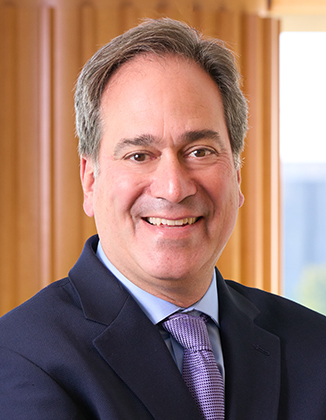
Key Figures

Timeline of Key Events
2018: Public confrontation between Mirkin and Lévy at an American Chemical Society meeting.
February 2024: PNAS publishes an article co-authored by Mirkin on the clinical efficacy of Cavrotolimod.
April 2024: Lévy submits a critical letter to PNAS, questioning the article’s claims
May 15, 2024: Mirkin’s lawyer issues a cease and desist letter to Lévy, threatening legal action for defamation
June 2024: PNAS rejects Lévy’s letter without publication
Further Reading
- Multimodal neuro-nanotechnology: new paradigm or renewed unfulfilled promises?
- Multimodal neuro-nanotechnology: Challenging the existing paradigm in glioblastoma therapy Proceedings of the National Academy of Sciences (2024)
- Exclusive: Kavli prize winner threatens to sue critic for defamation
- Kavli Prize Winner Threatens to Sue Me for Defamation

 ScienceWatchdog.id
Raphaël Lévy here: the picture is not me! LOL. You can use this one if you like.
Hey Levy, Oh my bad. Sorry for my mistake. I will update very soon.