
Global conflict profoundly disrupts the structural and functional capacity of public health systems. Between 2023 and 2025, major theatres of violence and instability created conditions in which disease, famine, displacement, and infrastructure collapse flourished, often in tandem. Public health collapses when war persists.
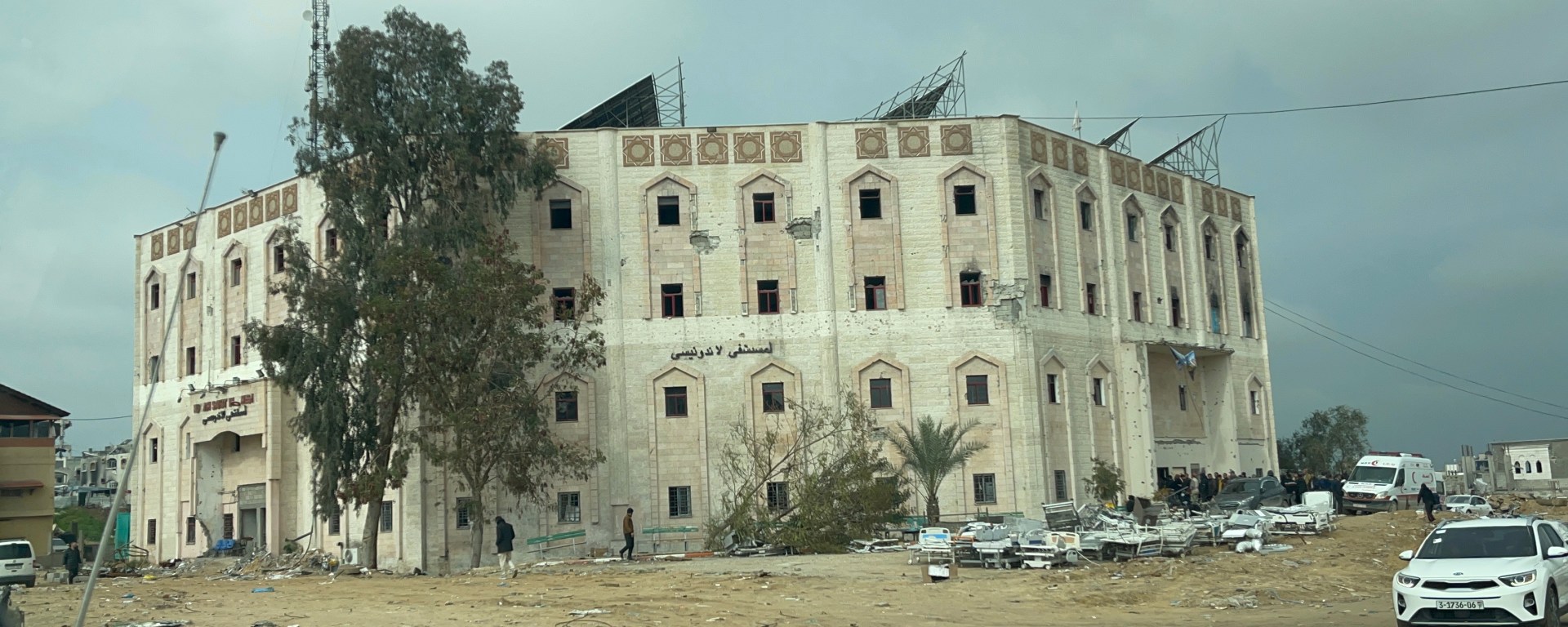
Armed conflicts have systematically dismantled health systems, accelerated disease transmission, and produced excess mortality that far exceeds battlefield deaths. Evidence from multiple regions converges on a single conclusion. Peace is not a moral add-on to health policy. It is a precondition. Recent evidence from global crisis zones underscores an unwelcome truism: pervasive conflict and war shatter public health. In Palestine, Sudan, Ukraine, Myanmar, and elsewhere, deliberate attacks and collateral damage have wrecked hospitals, clinics, and water systems, leaving health systems in ruins.
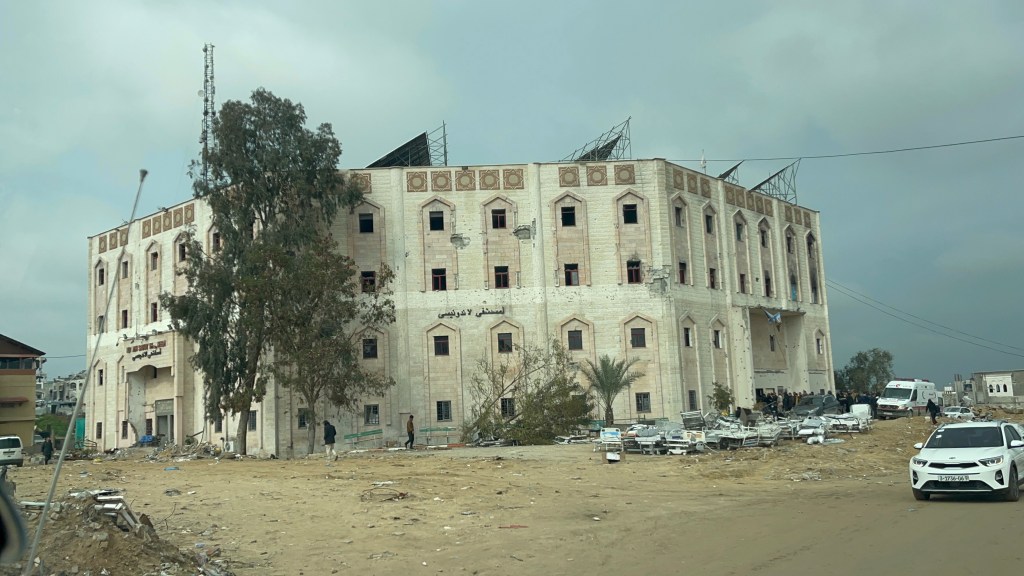
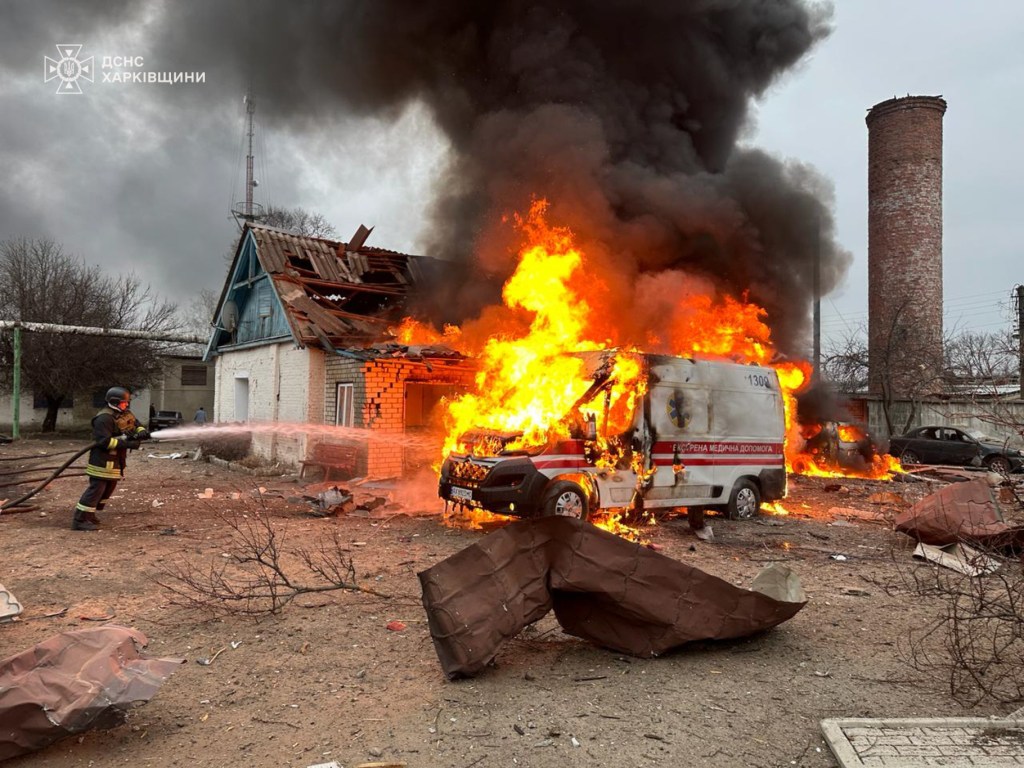
Armed conflict, in short, “significantly undermines healthcare systems’ effectiveness,” causing “widespread destruction and deep psychological trauma” that threatens public health at every level.For example, the WHO reports that nearly 94% of Gaza’s hospitals have been damaged or destroyed, and shortages of medicines and fuel have crippled remaining services. In Ukraine, the WHO has documented over 2,254 attacks on health care since the full-scale invasion began in 2022 until early 2025. These assaults on health infrastructure translate directly into human catastrophe: Palestine Ministry of Health counted roughly 63,700 deaths and 161,000 injuries since 10 September 2025, and in an early report in late 2023, Sudan suffered over 12,500 deaths and 26,000 injuries. Armed conflict, in short, “significantly undermines healthcare systems’ effectiveness,” causing “widespread destruction and deep psychological trauma” that threatens public health at every level.
CC BY-SA 4.0, https://commons.wikimedia.org/w/index.php?curid=160400818
The immediate toll of conflict is vivid. Bombardments and raids flatten operating theaters, emergency rooms, and water treatment plants. In Palestine’s recent war, even military hospitals were hit, one WHO report notes Al-Shifa and Al-Ahli hospitals operating at nearly 300% capacity under a constant onslaught. In Sudan, Government data shows 70% of health facilities in conflict-affected areas are now non-functional, and key centers for heart disease, diabetes care, and cancer treatment have shut down. In Myanmar, dozens of hospitals and clinics have been shelled or seized, and one analysis reports the health-care system there faces “near-complete destruction” after hundreds of attacks and blockades.
Across these contexts, health workers are targeted or flee for safety. In Darfur’s El Fasher, the WHO documented scores of killed or abducted health staff in late 2025, after repeated attacks on the only functioning hospital. The loss of medical personnel and facilities sharply reduces critical services. WHO data from Ukraine show that trauma care and prosthetics are in dire shortage after an estimated 100,000 war-related amputations by mid-2024, and basic services (from childbirth to dialysis) have been interrupted or halted in Sudan.
War also spawns secondary humanitarian emergencies. Massive displacement and infrastructure collapse foster disease outbreaks and malnutrition. In northern Gaza-Palestine, overcrowded shelters and contaminated water have seen childhood diarrhea cases spike, and by mid-2025, Gaza was officially in Famine (IPC Phase 5) in its north. WHO reports 361 Palestinians had died of malnutrition by September 2025 (most of them children) as food, water, and fuel were cut off. Similarly, in Sudan, conflict and heavy rains have displaced hundreds of thousands into camps with pitiful sanitation. WHO reports that over 17.7 million Sudanese (37% of the population) faced high acute food insecurity during 2023–24, with nearly 3.4 million children acutely malnourished. In these conditions, cholera has exploded: by early 2025, Sudan suffered three waves of cholera outbreaks totaling over 57,000 suspected cases and more than 1,500 deaths. UNICEF specifically links the cholera surge to conflict-driven destruction of water systems (70% of water facilities damaged) and mass displacement. In Ukraine and elsewhere, measles, tuberculosis, and other infectious diseases have rebounded as vaccination and treatment programs falter.
The Burden of Conflict Is Not Only Biological but Also Psychological
The burden of conflict on health is not only biological but also psychological. Millions of people endure daily trauma and fear, straining their mental well-being. In Ukraine, the WHO reports that 68% of citizens believe their health has declined since the war began; nearly half (46%) cite mental health symptoms, and 39% report neurological disorders. Gaza’s war has inflicted deep emotional scars: UNICEF found that thousands of Gazan children lost family members, and many suffer post-traumatic stress and depression under siege. In Myanmar, civilians in conflict zones live in terror of air raids; the WHO notes that chronic stress and lack of care make mental disorders and substance abuse more common. Across all these settings, the breakdown of social support and security constitutes a health hazard in itself. Rates of suicide, domestic violence, and psychosocial crises rise where community and clinical support collapse. Overall, conflict multiplies unmet needs for mental health services even as it destroys the very systems that provide them.
By Dsns.gov.ua, CC BY 4.0, https://commons.wikimedia.org/w/index.php?curid=146476614
Structural determinants of health crumble under conflict. Safe water, sanitation, education, and income – all usually taken for granted – become casualties of war. In Sudan, UNICEF notes that conflict has wiped out water and energy infrastructure in 13 states, leaving some nine million people without reliable, safe water. In Gaza-Palestine and Yemen, electricity and fuel shortages put patients at risk of dying from lack of dialysis or surgical anesthesia. Education systems shut down, causing long-term consequences for child development and future health literacy. As UN agencies highlight, conflict-driven collapse of housing and employment creates extreme poverty and homelessness, conditions prime for chronic illness and communicable disease spread. Climate stress further compounds these harms: droughts and heat waves disproportionately affect war-torn societies. For example, in Eastern Africa, climate-driven droughts and floods intersect with civil conflicts to produce famine among displaced populations. Over 45 million African children now face overlapping crises – famine, disease outbreaks, and extreme weather – that UNICEF explicitly ties to climate change, intensifying existing humanitarian emergencies. The erosion of social and environmental conditions in war zones (water systems, food security, housing) is itself a public health disaster.
Effective public health depends on peaceThe evidence is unequivocal: effective public health depends on peace. Decades of progress (in immunization, maternal health, and chronic disease control) are reversed when conflict erupts. WHO and independent analyses note that health infrastructure can “plunge into chaos” overnight under armed attack. Vaccination campaigns, which once eradicated diseases like polio, stall whenever fighting flares – leaving new generations vulnerable to preventable illness. Noncommunicable diseases (NCDs) also escalate; WHO notes that in Ukraine (where NCDs cause 84% of deaths) the war has cut access to medicines and care, threatening irreversible deterioration of patients with diabetes, cancer or heart disease. In Myanmar, conflict-induced shortages of antiretrovirals have left people with HIV without treatment, while halted malaria control has led to surges in drug-resistant malaria. These examples show that conflict routinely undermines the very social and systemic determinants of health that modern medicine seeks to improve.
Peace, by contrast, is a profound investment in health. Achieving and sustaining peace stabilizes health systems and enables preventative measures. Ceasefires allow the delivery of food, water, vaccines, and medicines; indeed, temporary truces have historically been used to allow the entry of polio vaccinators or cholera responders during several crises. Restored governance enables the reopening of schools, rebuilding of clinics, and rehiring of health personnel. Importantly, peace rebuilds social cohesion, like communities torn by war can begin to heal, reducing the chronic stress and violence that poison mental health. Conflict often “reinforces existing inequalities,” while peace offers a path to equity. In this sense, investments in peace–diplomacy, conflict resolution, and disarmament are as crucial to population health as any vaccine campaign or hospital ward.
Emphasize Health-Peace Linkages: Health as a Bridge for Peace
Policy experts and institutions now emphasize health–peace linkages. The WHO’s new Global Health and Peace Initiative advocates designing health programs that are conflict-sensitive and, where appropriate, peace-responsive. In practice, this means health workers evaluate local tensions and ensure that aid delivery does not inflame ethnic or political divisions; and when possible, they intentionally promote dialogue, inclusion, and trust as part of care. As the WHO notes, “health programming can be designed in a way that addresses underlying causes of conflict, tension, or mistrust” by focusing on local peace outcomes such as social cohesion.
Clinics become neutral meeting points, joint training or cross-border disease surveillance link divided communities, and mental health support for trauma also serves reconciliationIn this model, clinics become neutral meeting points, joint training or cross-border disease surveillance links divided communities, and mental health support for trauma also serves reconciliation. A WHO-commissioned review explicitly recommends using “conflict transformation and ‘Health as a bridge for peace’” as platforms for well-being. The approach has practical precedents: UN peacebuilding funding in places such as Somalia and Colombia has helped integrate former combatants into medical training and provided psychosocial care linked to reconciliation, with measurable community benefits.
To restore global public health, policy must bridge health and peacebuilding. Yet global health governance continues to treat peace as external to health. Funding streams prioritize biomedical interventions while neglecting the political conditions required for their effectiveness. Humanitarian responses focus on mitigation rather than prevention. Post-conflict reconstruction emphasizes infrastructure without equivalent investment in trust, governance, and social cohesion, all of which are essential for health system recovery.
Reframing peace as a core public health intervention has practical implications. First, health impact assessments should be integrated into conflict analysis and foreign policy decision-making. Military escalation, sanctions, and blockades carry predictable health costs that can be estimated and monitored. Second, protecting health infrastructure must be treated as a non-negotiable norm, enforced through accountability mechanisms rather than rhetorical commitment. Third, peacebuilding initiatives should be recognized as long-term investments in health, comparable in importance to vaccination and water and sanitation programs.
Operationally, this requires cross-sectoral coordination. Ministries of health cannot secure population health alone under conditions of violence. Diplomatic, development, humanitarian, and security actors must align incentives toward conflict prevention and civilian protection. Data systems capable of operating in insecure environments are essential for tracking mortality, disease trends, and service access, enabling evidence-based responses rather than reactive crisis management.
Failure to act on this evidence carries strategic consequences beyond humanitarian harm. Epidemics emerging in conflict zones do not respect borders. Forced migration reshapes regional health systems. Chronic instability undermines global disease elimination goals, from polio to tuberculosis. In this sense, peace is not only a local health determinant but a global public good. Finally, Global initiatives should promote the concept of “no health without peace,” treating peace itself as a health determinant on par with nutrition and sanitation.
Pervasive violence makes effective public health impossible. The twin catastrophes of recent years – from Palestine’s siege to Sudan’s civil war to Ukraine’s bombardment, illustrate that only when guns fall silent can hospitals function, clean water flow, and health workers safely care for populations. Sustainable public health, therefore, requires durable peace. Investing in conflict resolution, ensuring compliance with humanitarian law, and integrating peace goals into health policy are not optional moral arguments; they are vital strategies for saving lives and building a healthier world.

 ScienceWatchdog.id