
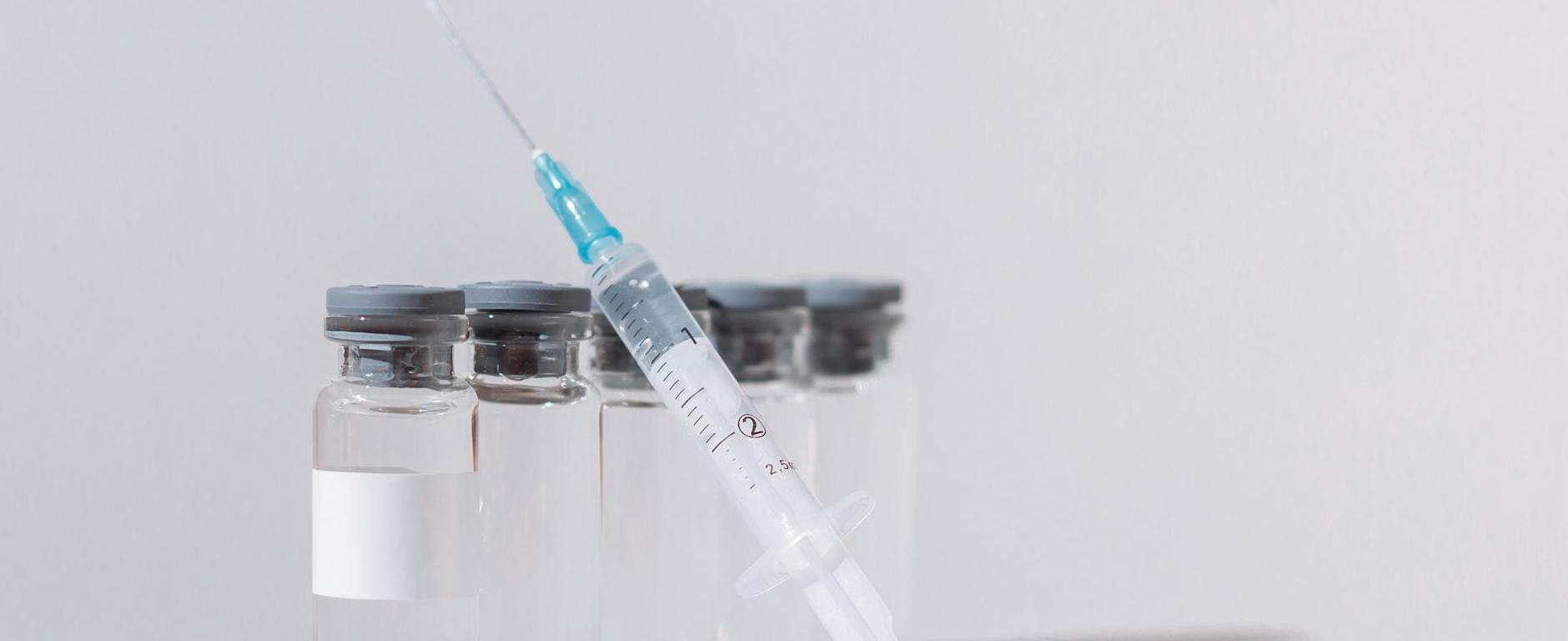
In early 2024, a quiet decision in the United States budget office set off alarm bells among global health experts. At a moment when scientific progress against HIV had finally turned a corner, the National Institutes of Health (NIH) abruptly cut $258 million in funding earmarked for some of the most promising vaccine development programmes in decades, including projects led by IAVI and Scripps Research. The signal could not be clearer: at the precise moment the world edged closer to a functional HIV vaccine, political inertia pulled the plug.
This decision is not merely a fiscal adjustment but a regression with human costs. In 2023 alone, 1.3 million people were newly infected with HIV, and 630,000 died from AIDS-related illnesses. These are not abstract numbers. They are the consequence of structural neglect, inequitable health systems, and a fraying commitment to science-led prevention.
HIV vaccine research has long stood at the intersection of immunology’s most significant challenges and humanity’s most urgent needs. The virus mutates rapidly and hides in the very immune cells meant to fight it. Decades of vaccine failures followed promising animal studies. Yet, in late 2023, NIH-funded trials achieved what once seemed nearly impossible: activating the rare B-cells needed to produce broadly neutralizing antibodies through a novel mRNA-based immunogen. This is no small feat. These cells are a vital first step in producing the immune responses that could neutralize HIV’s many variants—a foundation upon which more targeted vaccines could be built.
If this were oncology or cardiology, such a breakthrough would likely attract bipartisan celebration and new investment. But the politics of HIV, especially when filtered through global health diplomacy and racialised geopolitics, operate differently. And so, instead of capitalizing on this progress, the U.S. government redirected its budget away from vaccine R&D and toward what officials vaguely described as “other priorities.”
But this binary is both misleading and dangerous. First, Anti-Retroviral Therapy (ART) is indeed a cornerstone of HIV care. It can suppress the virus to undetectable levels, making transmission nearly impossible. But it is not a cure. It demands lifelong adherence, robust supply chains, and uninterrupted clinical infrastructure—conditions far from guaranteed, especially in fragile health systems. Moreover, nearly one in four people living with HIV still lack access to ART, according to UNAIDS. To frame the cuts as a trade-off between treatment and prevention is to ignore that both are now underfunded. U.S. foreign assistance for global health has stagnated or declined in real terms, and global financing gaps for HIV responses—particularly in sub-Saharan Africa and Southeast Asia—have widened.
This retreat is particularly troubling because it risks reinforcing a two-tiered global health regime. On one side, high-income countries offer their populations both therapeutic and preventive options, from PrEP to vaccines-in-the-making. On the other hand, low and middle-income countries are expected to “make do” with older tools and inconsistent access, just as they were told to during COVID-19. Vaccine apartheid may not be an official policy, but it has become a predictable outcome of donor disengagement.
To make matters worse, the economic logic behind these cuts does not hold up. Investing in an HIV vaccine is not a sunk cost but a multiplier. While specific modeling studies quantifying the cost-effectiveness of an HIV vaccine are limited, the broader consensus in public health economics suggests that preventive measures, such as vaccination, can lead to substantial long-term savings by reducing the incidence of disease and the associated treatment costs. Moreover, vaccine platforms developed in the HIV context—such as mRNA technologies—have demonstrated versatility and potential for adaptation to other pathogens, including coronaviruses. The opportunity cost of cutting this line of research is not merely HIV-specific; it is systemic
The broader question is one of public commitment: do we invest in innovation only when pandemics reach rich countries, or do we sustain scientific progress in anticipation of shared threats? If the answer is the latter, as it should be, then the current trajectory is untenable. Global health solidarity cannot be reactive or episodic; it must be institutional, resilient, and rooted in equity.
We must also reconsider who controls the narrative around global health priorities. It is not coincidental that the institutions affected by the NIH cuts—Scripps, Duke, IAVI—are among those that have historically collaborated with researchers and trial sites in the Global South. Vaccine development is increasingly a transnational enterprise, and pulling funds from such networks disrupts research pipelines and capacity-building partnerships that have taken years to establish. The erosion of these partnerships undermines the very architecture of global health security.
Crucially, silence now will only deepen the inequities of tomorrow. Political neglect breeds scientific delay, and delay—when measured in viral transmissions—is deadly. Halting funding at the cusp of a breakthrough is not strategic—it is reckless.
There is still time to reverse course. Congress can move to restore and ring-fence HIV vaccine funding. International donors, too, can step up, leveraging new financing instruments or global innovation funds to protect early-phase research. Philanthropic actors like the Gates Foundation or Wellcome Trust can play a bridging role. Multilateral platforms such as the Global Fund and GAVI must recognize that prevention, including vaccine R&D, is not an optional add-on but a foundational pillar of pandemic preparedness.
We must call out the broader logic that underpins such cuts: the idea that science is a luxury in a time of economic uncertainty. It is not. If the COVID-19 pandemic taught the world anything, waiting until a crisis hits is both more expensive and more lethal. The first antiretroviral drug for HIV was approved in 1987. It was the beginning of a new era, but global access took another two decades to become a reality. Let us not repeat history by defunding hope just as it becomes tangible. A vaccine against HIV has long been described as the “holy grail” of infectious disease. We now stand within reach. To let go now would not only be shortsighted, it would be unconscionable. Because in the arithmetic of epidemics, every dollar withdrawn is measured in lives lost.

 ScienceWatchdog.id