
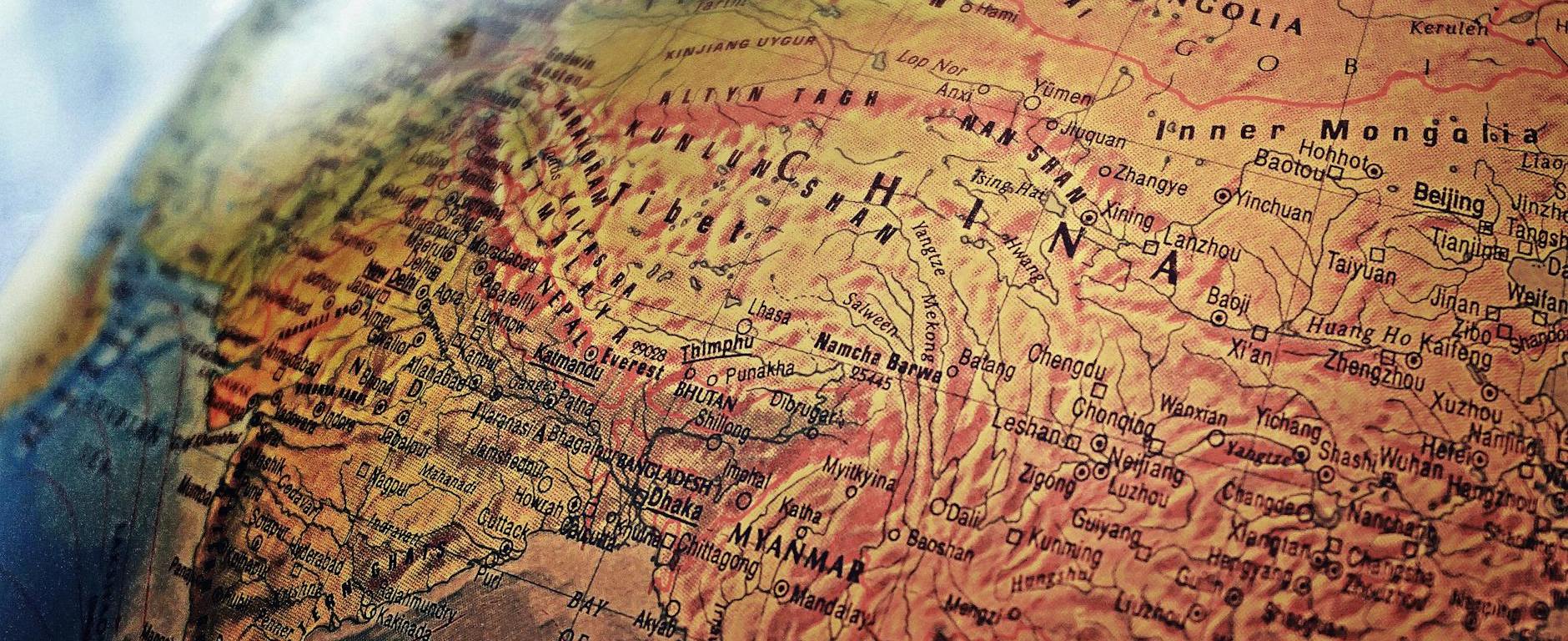
Science plays an important, yet often invisible, role in diplomacy. And while funding scientific research isn’t the most significant factor in determining a country’s global prowess, China’s recent science agreements with the low and middle-income countries in the Global South are a game-changer. As Beijing couples scientific collaboration with its business interests and the societal problems in the developing world, it is evident that China understands how science intertwines with power. By looking into its recent diplomatic moves in Indonesia, it is feasible that collaborative research could bring in more resources and magnify its geopolitical power in the region of interest.
Since the 1950s, China has signed 115 science and technology agreements (STA) with Global North and Global South countries. As the country expands its Belt and Road Initiative in the tropics, recent STA signings and renewals could be more of a quid pro quo than an altruistic support for the sciences. Science diplomacy expert from Ohio State University, Carolyn Wagner, suspects China uses a “friendship model” in its dozens of agreements with low and middle-income countries with the purpose of “keeping a friend with the idea of being able to ask favors in the future.”
To this end, in 2023, the Chinese Ministry of Foreign Affairs listed “369 concrete outcomes” related to Belt and Road Cooperation. This confirms an analysis by Xin Li, a scholar of Foreign Experts Department at the Chinese Ministry of Science and Technology, that his country’s science diplomacy moves are always “shaped by prevailing politics and economics issues of the times”. Most of these are science-related agreements with countries in sub-Saharan Africa, Latin America, the Middle East, Central Asia, and Southeast Asia. Science and society are intrinsically connected, making China’s science diplomacy an additional tool to quietly enmesh itself in other countries’ development, from archaeological projects in Bangladesh, establishing a sustainable food innovation center in Argentina, and exploring the science of Chinese herbal medicines in Singapore. Most of these agreements outline research goals, but some would cite a research funding cooperation too. These agreements can also support research that directly benefits China, such as the China-Arab International Research Center addressing droughts, desertification, and land degradation, as well as the China-ASEAN mangrove partnership.
These friendship ties could be “a blunting strategy” to push out Western influence. But business interests, which undoubtedly influence its geopolitical power too, also play a role. China signed agreements with Eritrea, Guinea, Congo, Kazakhstan, and Argentina to help the countries extract copper, cobalt, and iron ores...Wagner says these friendship ties could be “a blunting strategy” to push out Western influence. But business interests, which undoubtedly influence its geopolitical power too, also play a role. China signed agreements with Eritrea, Guinea, Congo, Kazakhstan, and Argentina to help the countries extract copper, cobalt, and iron ores. Wagner also discovered some business activities that benefited from STAs, such as the establishment of a rocket engine manufacturing facility in Singapore by Landspace, a Chinese private space company. Another company, China Great Wall Corporation, launched satellites for Nigeria, Venezuela, and Pakistan.
But there is more to science diplomacy than paper signings and business establishments.
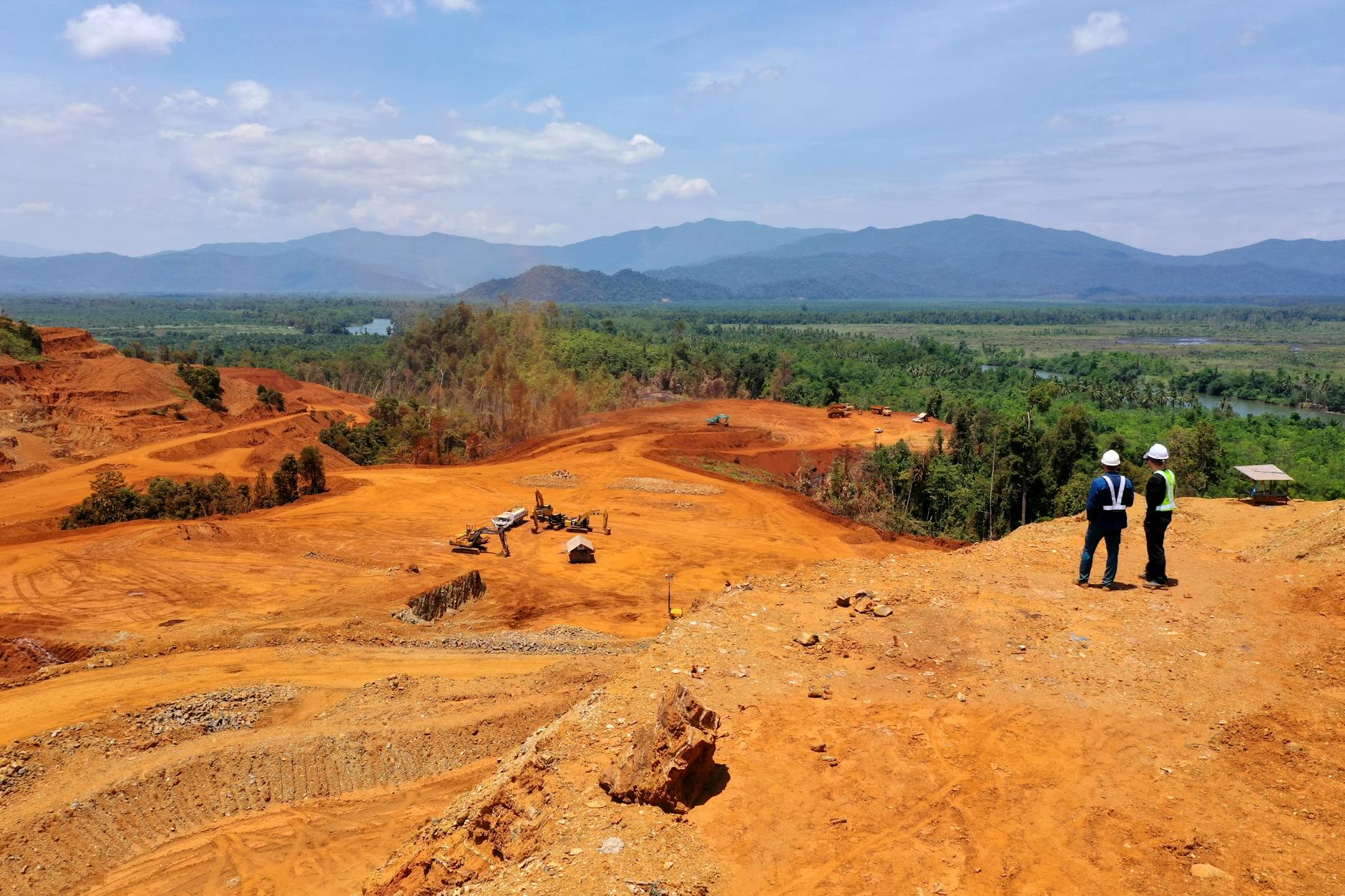
The recent agreements between China and Indonesia exemplify science’s inherent duality: it is both a tool for good and one for manipulation. Both countries have agreed to co-investigate the vast, understudied Indonesian waters by conducting joint research, exchanging researchers, and surveying the ocean sea beds. While the agreements might strengthen scientific research collaboration between the two countries, sneaking in business interests might further exploit Indonesia’s natural resources, decimating the environment, and harming marginalized people. As previously seen in Sulawesi and surrounding islands, research-backed nickel exploitation had polluted the rivers, cutting local access to clean water. But this time, Indonesia has an option to choose a different fate. By strengthening Indonesia’s geopolitical position in the region through alignment with China, recently inaugurated Indonesian president Prabowo Subianto might change the status quo. In 8-10 November 2024, Subianto paid Xi-Jinping a visit and agreed to build stronger “political mutual trust” in various sectors, including on the maritime cooperation.
On the ground, an agreement on marine research collaboration symbolized a stronger bond between the researchers of the two countries. In March 2024, a team of Indonesian and Chinese scientists dived 4000 miles under the sea to explore the seafloor of the Java Trench to collect its physical and biological samples. Andina Ramadhani Pane, a marine biologist at Indonesia’s Agency for National Research and Innovation (BRIN), a super body that plans, funds, executes, and monitors research in the country, said she was grateful to have that once-in-a-lifetime experience and that she was mentored by veteran Chinese marine biologists. Before that, BRIN’s research center for the deep sea was inert due to a lack of financial support and, to some extent, BRIN’s messy restructuring process. But with the Fendhouze submarine provided by the Chinese team, Pane could do the dream work of any marine biologist: to explore the ocean and analyze them with state-of-the-art methodology.
On Nov. 20, 2024, Laksana Tri Handoko, a theoretical physicist who leads BRIN, welcomed China’s Ambassador Wang Lutong to his office in Jakarta. He said that China is one of Indonesia’s “most important research partners” and was ready to follow up on Subianto’s visit to Beijing for further collaboration. At the end of the year, BRIN signed two science agreements with two Chinese ministries, as reported by local news sites. Now, China’s Ministry of Natural Resources will overseas China-Indonesia research collaboration on deep-sea research, while the China’s Ministry of Science and Technology (MOST) Yes will deal with research on health, energy, and the environment.
China has much to gain from these collaborations, and the fact that two Chinese ministries are involved in science collaboration implies serious economic and geopolitical motives behind the agreements. The signing of the China-Indonesia deep-sea research agreement was witnessed by Indonesian Coordinating Maritime Minister Luhut Binsar Pandjaitan, an Indonesian politician known for his business interests in national politics. The Minister is known to own companies exploiting Indonesia’s natural resources, such as coal, nickel, oil palm, and also oil and gas. For the last-mentioned, he collaborated with an American company in “managing marine data”. He could get the same benefit from deep-sea research in China and Indonesia. During the signing ceremony of health and energy research, China’s MOST “express its readiness” to support research on “renewable energy, biofuels, electric vehicles, and biotechnology.” BRIN and universities in Indonesia have been able to do this kind of research on its own but a support from the world’s emerging science superpower would boost productivity. My bibliometric analysis– mined from Scopus-indexed journals- also shows China’s close interest in Indonesian nickel, as it is the second country that has done the most research on natural resources besides Indonesia itself. This twinkle hints at China’s business interest in its scientific research collaboration with Indonesia. The country has invested at least 30 billion USD to Indonesian downstream nickel, with 90% of the ores goes to Beijing.
Another problem might arise from the China-Indonesia research collaboration. As an ally of capitalism, science always sides with those with the most resources. Countries with the money to fund science often guide the research questions and scope, with Global South scientists performing as field workers—in the case of genetic research on Sulawesi sea-nomads, they only act as logistic providers, which was to assist the American researcher finding a place to stay and arrange the transportations.
Nevertheless, science and business are the elements of power. In the 1990s, Stanford’s Henry Etkowitz and his Dutch colleague Loet Leydesdorff theorized that interactions between academia, industry, and government determine a country’s economic and social development. Developing countries who have signed the STAs with China may want to use this triple helix to achieve the status of a knowledge-based economy and elevate themselves on the global stage. However, the agreements balloon China’s geopolitical status more, leaving the countries conducting the research to play an unwinnable game of catch-up.
In his opinion article for Kompas, Philip Vermonte, the director of the Indonesian Center for Strategic and International Studies (CSIS), highlights the China-U.S. geopolitical tension in the South China Sea. Vermonte says the focus on the United States and China’s competition shows that “international politics is the politics of great countries.” He then referred to a quote from “Peloponnesian Wars” written by Greek writer Thucydides, that “the strong do what they want, the weak suffer what they must.” He warns Indonesia to be cautious in navigating the tension in this region of interest, balancing good relationships with the United States and China as to not fall into the category of a “weak” country that is exploited by others with more power. This Greek literature analogy also should be applied on Indonesia-China research collaboration, which must be done equally, far beyond becoming field work assistant.
But Alfin Basundoro, a Master’s student at the Australian National University, in his opinion piece for the Rajaratnam School of International Studies in Singapore, says Prabowo’s November 2024 visit to Beijing shows Jakarta’s “inconsistency” on the country’s stance on the South China Sea conflict. It is inconsistent, he says, to align with China while committing to the United Nations Convention on the Law of the Sea (UNCLOS). Indonesia-China cooperation in maritime development—including deep-sea research collaboration—questions Indonesia’s commitment to protecting “national sovereignty” and obeying “international law.” “While economically beneficial, it risks legitimizing China’s claim in the South China Sea.” He also says it could strain relations within ASEAN and risk Indonesia’s reputation as a country known for its actively neutral foreign policy.
Handoko says the agency is being careful in managing specimens and data exchange within the collaboration. And besides China, BRIN is also collaborating with Japan for green energy, South Korea for nuclear research, France to develop its submarine, and Dutch for historical manuscripts. He also invited international post-doctoral fellows to work in the agency. As of today, around 300 foreign scientists are working with BRIN, including those from ASEAN countries. “International collaboration is a must to accelerate capacity building,” says Handoko.Anticipating this geopolitical situation, Indonesia could use science to get back on track. Handoko, the BRIN leader, is a scientist who understands how science works: it is a social enterprise rather than solitary or elitist work. As Subianto’s subordinate, he supports the president’s closer move to Beijing. But he told Foreign Policy that BRIN has been doing massive science diplomacy moves to boost Indonesian science on the global stage. Handoko says the agency is being careful in managing specimens and data exchange within the collaboration. And besides China, BRIN is also collaborating with Japan for green energy, South Korea for nuclear research, France to develop its submarine, and Dutch for historical manuscripts. He also invited international post-doctoral fellows to work in the agency. As of today, around 300 foreign scientists are working with BRIN, including those from ASEAN countries. “International collaboration is a must to accelerate capacity building,” says Handoko.
Indonesia certainly has a bargaining position in its science diplomatic ties with Beijing. Only with a full conscience toward equal research collaboration does Indonesia achieve its long-known non-sided foreign policy. In this 21st-century geopolitical war, Indonesia must not be “the weak” who “suffer what they must.”

 ScienceWatchdog.id