On January 20, 2025, former President Donald Trump signed an executive order for the United States to withdraw from the World Health Organization (WHO). This decision, effective within a year, reignited debates over global health governance and international cooperation. It reflects skepticism toward multilateral institutions and raises questions about the future of global health leadership. A similar attempt was made in 2020 but reversed by the subsequent administration, highlighting persistent concerns about the WHO’s efficiency and impartiality.
The United States has been a key contributor to the WHO’s funding and operations. Over the past decade, U.S. contributions ranged from $160 million to $815 million annually, accounting for nearly 18% of the organization’s overall budget. These funds supported critical programs combating diseases like HIV/AIDS, malaria, and tuberculosis while enabling rapid responses to health crises such as the Ebola and COVID-19 outbreaks. The abrupt cessation of U.S. funding could severely impact these programs, especially in regions heavily reliant on WHO support.
Funding Structure of the WHO
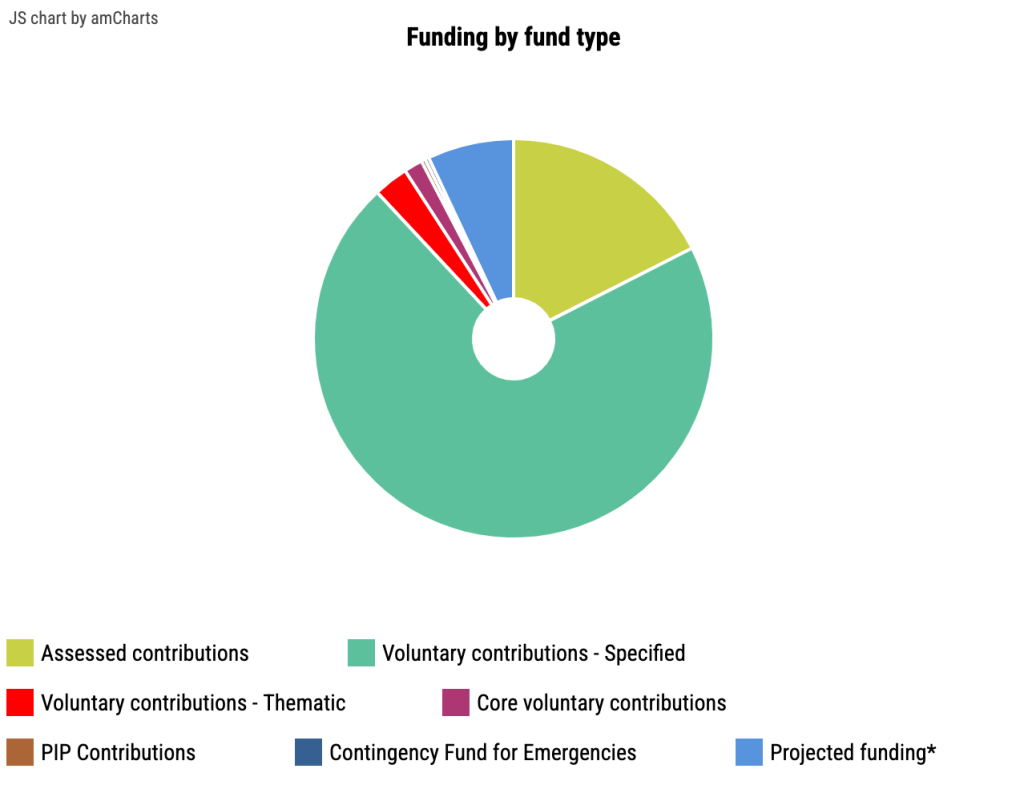
The WHO relies on two main funding sources: Assessed Contributions (AC) and Voluntary Contributions (VC). Assessed contributions are mandatory payments based on a member state’s gross domestic product (GDP). These payments account for less than 20% of the WHO’s total budget, providing a predictable base of funding for essential functions. In contrast, voluntary contributions make up approximately 80% of the WHO’s budget, amounting to around $3.7 billion annually. These funds come from member states, philanthropic organizations like the Bill and Melinda Gates Foundation, private companies, and other entities. Unlike AC, voluntary contributions are often earmarked for specific initiatives, leading to imbalances in resource allocation and program focus.
Historically, the United States has been the largest single-country donor, contributing approximately $220 million annually during the 2022-2023 cycle. Other significant contributors include China ($115 million), Japan ($82 million), Germany ($58 million), and the United Kingdom ($44 million). Reliance on voluntary contributions makes the WHO vulnerable to shifts in donor priorities, as seen with the U.S. withdrawal.
In response to funding challenges, the WHO launched a $1.5 billion Health Emergency Appeal (HEA) for 2025. This initiative aims to address 42 ongoing crises, including severe emergencies requiring extensive global support. Such appeals highlight the financial gaps created by inconsistent donor support and underscore the urgency of diversifying funding sources.
Now, How Implications of U.S. Withdrawal for Global Health?
Policy and Program Disruptions:
The loss of U.S. funding could disrupt vital WHO initiatives. Programs targeting infectious diseases like malaria, HIV/AIDS, and tuberculosis may face delays or downsizing, jeopardizing progress in vulnerable regions. Moreover, the withdrawal undermines global disease surveillance and data-sharing systems. These systems were crucial during the Ebola crisis and COVID-19 pandemic, providing real-time insights and guiding vaccine distribution. Without access to such data, global health responses risk fragmentation and inefficiency.
Without access to such data, global health responses risk fragmentation and inefficiency.
Geopolitical and Leadership Challenges:
The U.S. departure creates a leadership void in global health governance. This gap may be filled by countries like China or regional blocs such as the European Union (EU), which are increasingly assertive in shaping global health priorities. Non-state actors, including major philanthropic foundations, might also expand their influence. However, this shift could realign global health policies toward narrower geopolitical or organizational interests, potentially at the expense of equitable health outcomes.
..This shift could realign global health policies toward narrower geopolitical or organizational interests, potentially at the expense of equitable health outcomes.
The decision also tests the resilience of multilateral partnerships. Without U.S. participation, collaborative efforts to tackle shared health threats may falter, prolonging health emergencies and diminishing the effectiveness of coordinated interventions.
Opportunities for Reform
The U.S. withdrawal has sparked discussions about reforming the WHO to enhance its efficiency, transparency, and independence. Proposals include revising governance structures, improving financial accountability, and reducing reliance on voluntary contributions. Establishing a contingency fund managed by a coalition of member states could provide a financial safety net, ensuring continuity in times of fiscal uncertainty.
The United States’ decision to withdraw from the WHO marks a turning point in global health diplomacy. It disrupts critical health programs, weakens international collaboration, and amplifies existing challenges within the WHO’s funding model.
Addressing these issues requires a multifaceted approach. Strengthening regional collaborations, such as those led by the European Union, African Union, MERA and ASEAN can pool resources and expertise. Expanding partnerships with philanthropic organizations and private entities can help close funding gaps while fostering innovation.
Finally, reforms that enhance financial stability and operational transparency are essential to restoring trust and effectiveness. As global health threats continue to evolve, the need for unified, well-funded international health systems is more urgent than ever. Re-engaging the United States or implementing alternative mechanisms will be critical to ensuring the stability and resilience of global health governance.

 ScienceWatchdog.id