

Disclosure: In this brief report, the authors were assisted by OpenAI to analyse the dataset/metadata and used for data visualisation.
The phenomenon of scientific retractions, defined as the formal removal of a published paper from the scientific record due to errors, fraud, or ethical violations, has garnered increasing attention as a critical indicator of research integrity and the effectiveness of peer-review and publication frameworks. This corrective mechanism serves not only to address inaccuracies but also to uphold the credibility of the academic enterprise.
Retractions provide numerous benefits to the scientific community, including preserving research integrity, protecting public trust, improving peer-review standards, and fostering scientific progress. By correcting errors and deterring unethical practices, retractions help maintain a robust and reliable foundation for future research while ensuring accountability at all levels of the academic ecosystem.
This trend has emerged partly due to the exponential growth in research output and the rise of open-access publishing, both of which have intensified the need for rigorous quality control and oversight in academic publishing. A rigorous analysis of global retraction trends, complemented by insights specific to Indonesia, illuminates underlying dynamics and opportunities for systemic improvement.
Global Trends in Retractions
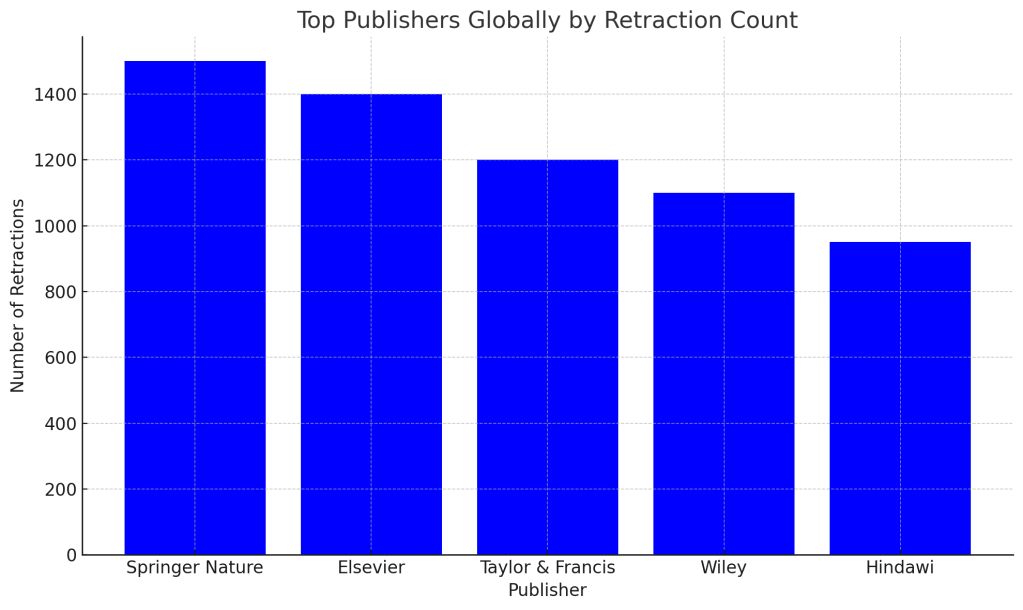
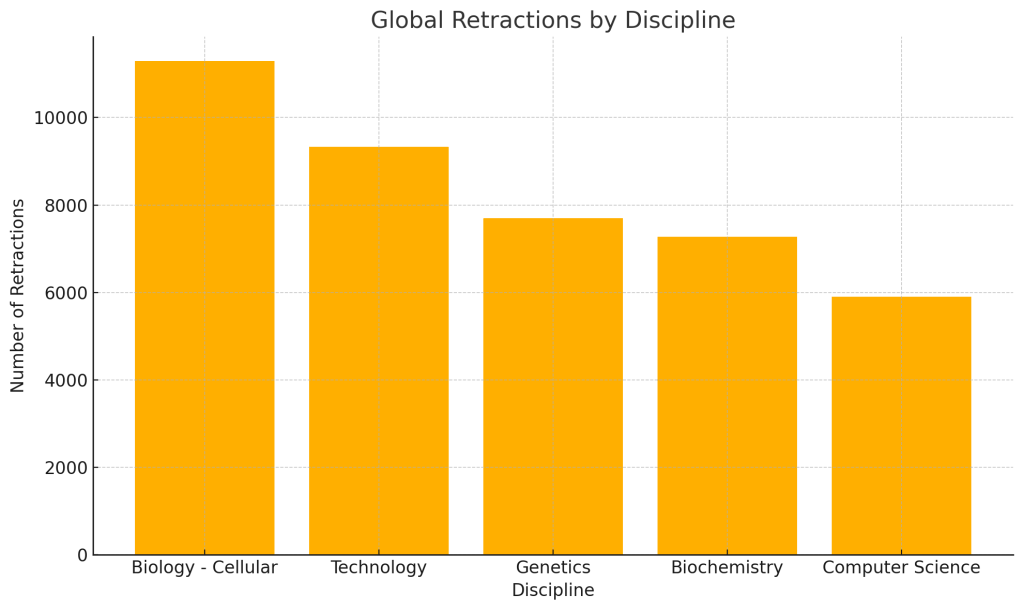
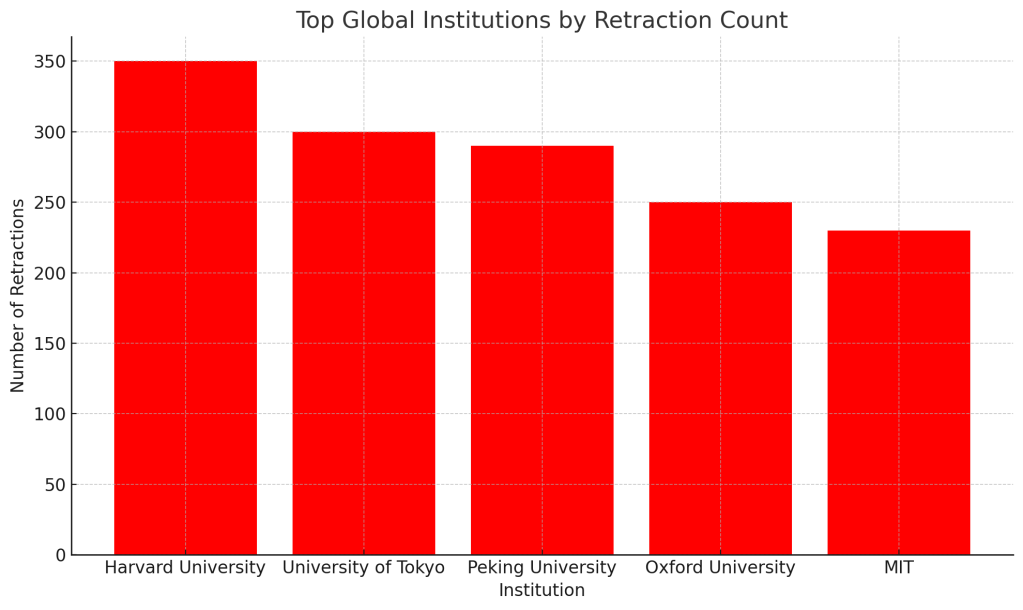
The global incidence of retractions has risen steadily, particularly in high-stakes disciplines such as technology, computer science, and biomedical sciences. With over 59,000 documented retractions, distinct patterns emerge:
- Leading Causes of Retractions: Predominant factors include investigations initiated by journals or publishers (20,756 cases), unreliable results (14,074 cases), and data integrity concerns (12,983 cases). For instance, the retraction of several high-profile studies in biomedical sciences, such as those involving manipulated clinical trial data, has brought significant attention to data integrity issues. These cases underscore the broader challenges faced across disciplines in maintaining rigorous research standards. These trends underscore pervasive challenges in ensuring methodological rigor and ethical compliance.
- Principal Drivers of Retractions:
- Fraudulent Practices: Fabricated peer reviews, plagiarism, and the proliferation of paper mills significantly undermine research credibility.
- Methodological Deficiencies: Inconsistent results and instances of data falsification or fabrication are recurrent issues.
- Research Errors: Honest errors, whether originating from authors or publishers, account for a notable proportion of retractions.
- Ethical Breaches: Disputes over authorship and unethical research practices exacerbate retraction rates.
- Investigative Interventions: Retractions often follow scrutiny by journals or third-party evaluators, reflecting systemic oversight mechanisms. A notable example includes the investigation into the Séralini affair, where a controversial study on genetically modified organisms was retracted after extensive third-party scrutiny revealed methodological flaws and unsubstantiated conclusions. This case highlights the importance of rigorous post-publication review in maintaining the credibility of scientific research.
- Journals with High Retraction Rates: Platforms such as PLoS One (1,019 retractions) and technology-focused conference proceedings emerge as key contributors. These cases highlight vulnerabilities in publication models characterized by high output and rapid review cycles.
- Geographical Patterns: China leads with 28,504 retractions, indicative of its burgeoning research output coupled with quality control challenges. Other nations exhibit trends reflective of their research ecosystems and governance structures.
- Reforms in Retraction Practices: Noteworthy improvements are observed in journals like the Journal of Environmental and Public Health, which has achieved a 99.7% reduction in retractions, signaling the efficacy of editorial and peer-review enhancements.
Indonesian Retraction Trends
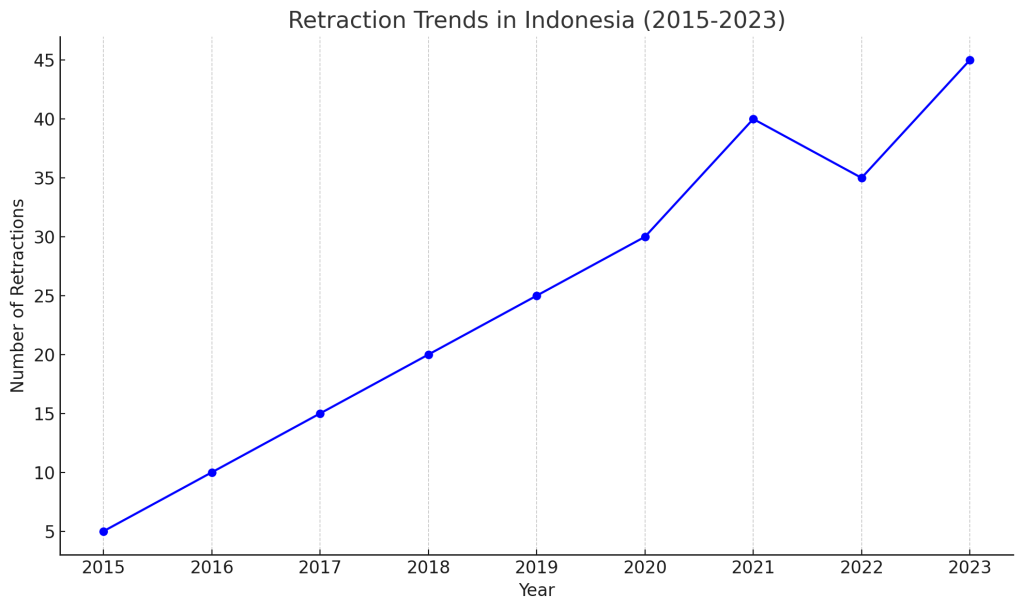
As a growing contributor to the global research landscape, Indonesia’s retraction patterns offer a unique perspective:
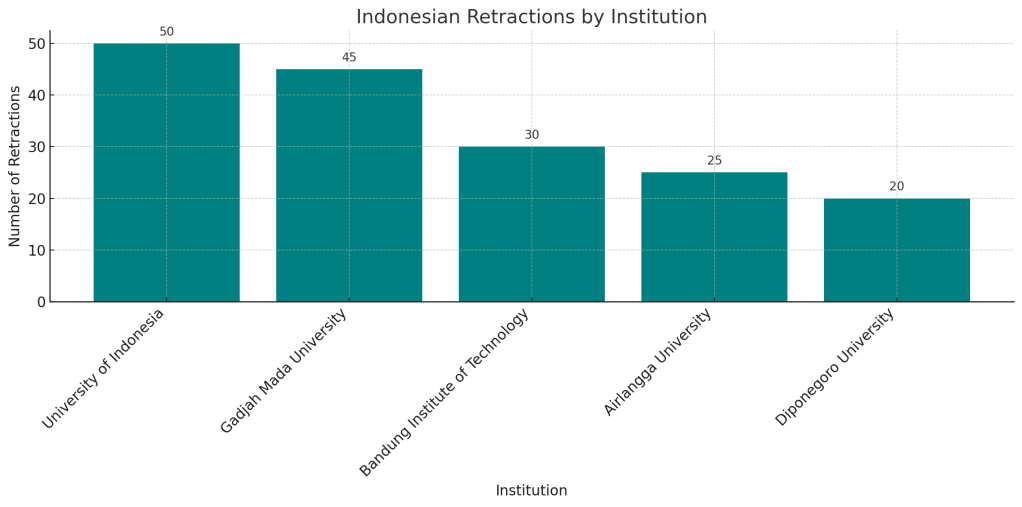
- Prominent Authors: Researchers with 20 retractions and 10 retractions illustrate concentrated challenges, potentially tied to specific projects or institutional practices. These challenges may include insufficient oversight during the research process, inadequate mentorship or collaboration frameworks, and systemic pressures to publish that could compromise research quality. Such issues highlight broader implications for Indonesia’s academic community, including the need for stronger institutional policies, enhanced funding for methodological training, and a more supportive infrastructure to foster ethical and high-quality research outputs.
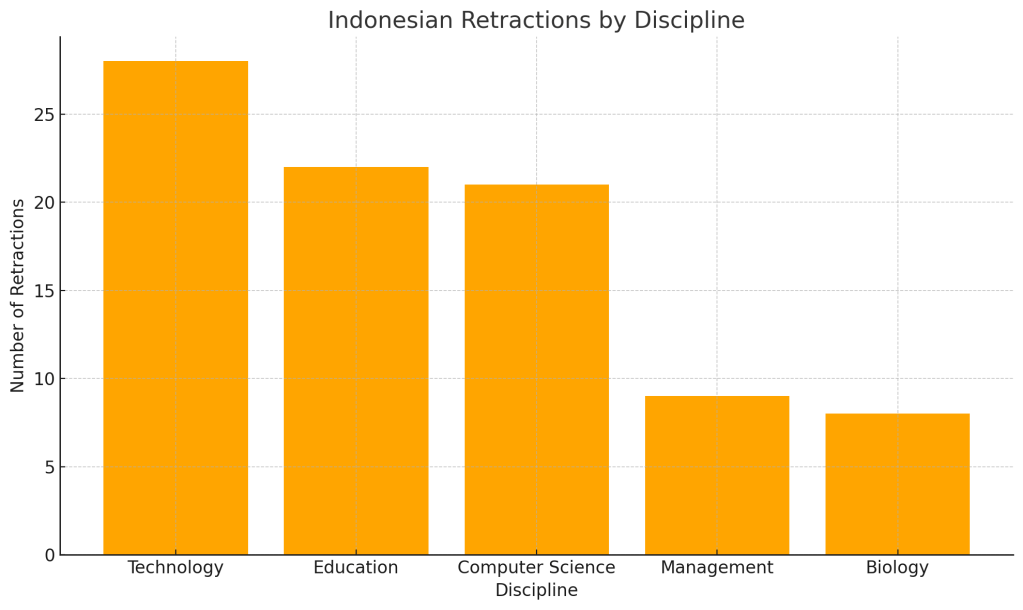
- Dominant Disciplines: Technology (28 retractions) and education (22 retractions) reflect national research priorities while also revealing systemic vulnerabilities in these areas.
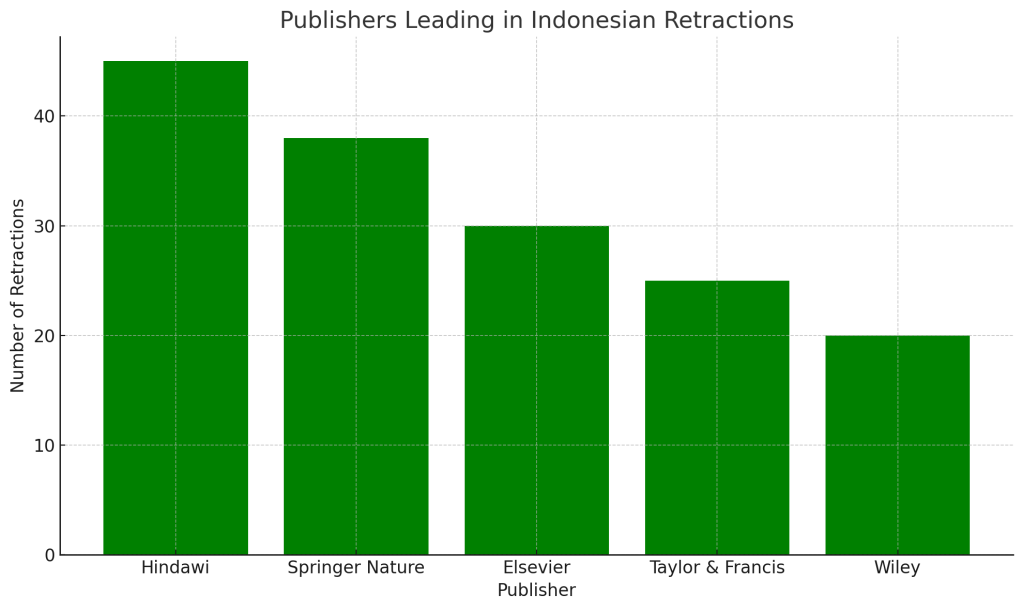
- Key Journals: Journal of Physics: Conference Series (42 retractions) leads the way as a destination journal publication in Indonesia, emphasising the need for stricter peer review protocols in conference proceedings.
- Primary Retraction Reasons: Errors by journals or publishers (36 cases), duplication of articles (19 cases), and broader investigative findings (17 cases) dominate. These factors mirror global trends, where similar reasons for retractions persist across various disciplines. Notably, errors by publishers often stem from lapses in editorial oversight or inadequate peer review processes, which can lead to significant consequences for the integrity of published research. Duplication of articles reflects underlying issues in authorial practices, including attempts to maximize academic output without due consideration for originality. Investigative findings, often triggered by whistleblowers or post-publication scrutiny, underscore the critical role of accountability in research governance. Collectively, these reasons highlight localized governance gaps while aligning with global patterns, necessitating targeted interventions to enhance the reliability and transparency of the publication process.
Advancing Retraction Practices
Global advancements and Indonesian developments both exhibit promising trends. Globally, enhanced editorial standards, transparency initiatives, and ethics education are leading to significant reductions in fraudulent and erroneous publications. These improvements serve as a foundation for fostering accountability and maintaining the credibility of scientific research. In Indonesia, similar strides are evident, with growing emphasis on ethical education and improved peer-review protocols. Together, these efforts underscore a unified commitment to elevating research quality and integrity worldwide.
- Enhanced Editorial Standards: Strengthened peer-review systems and editorial scrutiny are reducing instances of fraudulent and erroneous publications.
- Transparency Initiatives: Publicly accessible databases and detailed retraction notices foster accountability and facilitate broader trend analysis.
- Ethics Education: Expanding programs aimed at cultivating research integrity and methodological competence address fundamental causes of retractions.
Scientific retractions, while often seen as a negative outcome, serve an essential role in maintaining the integrity of the academic record and advancing the quality of research. Here are the key benefits of retractions:
1. Upholding Research Integrity
- Correction of Errors: Retractions help correct the scientific record by identifying and addressing errors in research findings, whether accidental or deliberate.
- Accountability: They signal to the research community that there are consequences for misconduct or methodological shortcomings, promoting ethical practices.
2. Protecting Public Trust
- Reliability of Research: Retractions ensure that only validated and reliable findings are used to inform subsequent research, policies, or clinical practices.
- Public Confidence: Demonstrating a commitment to correcting errors can enhance public trust in the scientific process.
3. Improving Peer-Review Standards
- Feedback for Journals: Highlighting flaws that led to retractions provides journals with insights into how peer-review processes can be strengthened.
- Guidance for Researchers: Retractions offer lessons on avoiding pitfalls such as inadequate experimental design or ethical oversights.
4. Promoting Scientific Progress
- Preventing Propagation of Errors: By removing flawed studies from the literature, retractions prevent the propagation of incorrect data or conclusions in future research.
- Fostering Transparency: The willingness to retract erroneous work reinforces a culture of openness and accountability, which is vital for scientific advancement.
5. Encouraging Better Training and Oversight
- Institutional Improvements: Institutions often respond to retractions by implementing better research oversight and training programs.
- Researcher Development: Young researchers can learn from retraction cases, helping them develop stronger ethical and methodological standards.
Scientific retractions, while often perceived negatively, play a pivotal role in safeguarding research integrity. The observed trends underscore both persistent systemic challenges and areas of substantial progress.
For Indonesia, prioritizing institutional reforms and fostering a robust research ethics culture will be essential for reducing retractions and enhancing the nation’s scientific standing. Globally, the sustained focus on transparency, methodological rigor, and robust peer review remains integral to advancing credible and impactful science.

 ScienceWatchdog.id